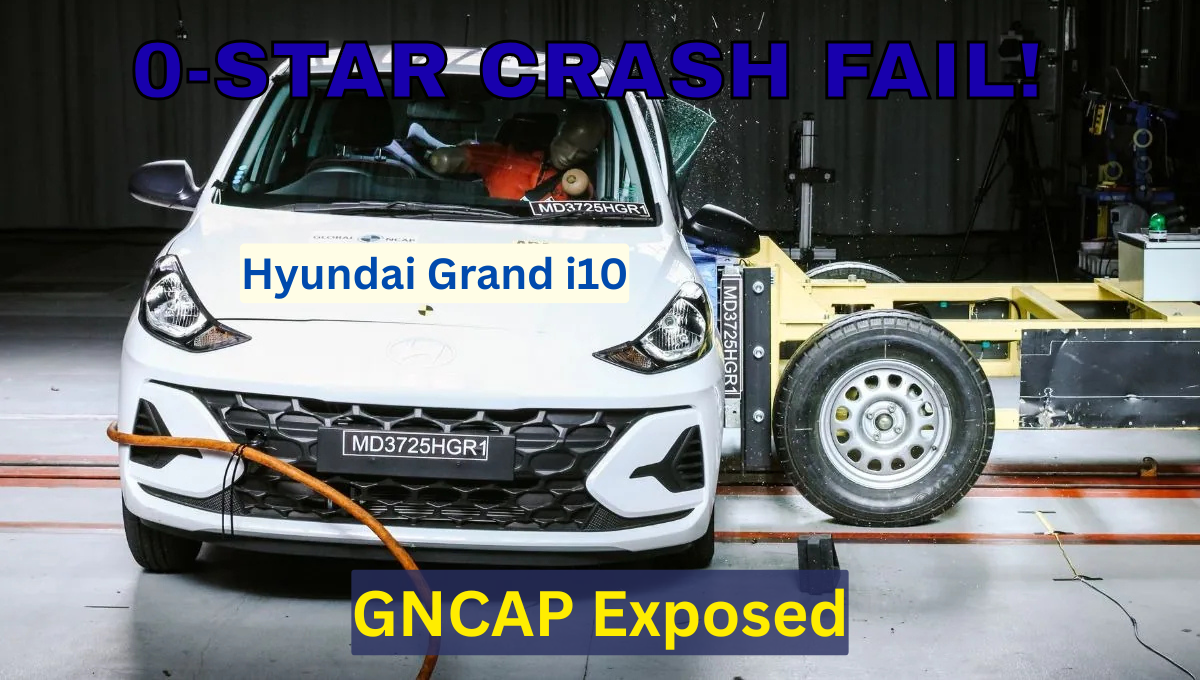
Hyundai Grand i10 earns 0 stars in Global NCAP crash test for adult protection—India-made model for Africa fails badly. Key details, India-spec differences, and safety tips inside.
The India-manufactured Hyundai Grand i10 has scored a dismal zero stars for adult occupant protection in the latest Global NCAP #SaferCarsForAfrica crash tests, highlighting serious safety shortcomings in this popular hatchback. While it managed three stars for child protection, the frontal and side impact results revealed weak chest protection for drivers and unstable bodyshell integrity, posing high risks of life-threatening injuries. This news raises eyebrows for Hyundai Grand i10 fans worldwide, especially as the car shares roots with the India-spec Grand i10 Nios.
Hyundai Grand i10 Crash Test Breakdown
In the frontal offset test, the Grand i10 showed marginal head and neck protection but weak results for the driver’s chest, with the bodyshell and footwell rated unstable—unable to handle further loads. Side impact was even worse, with chest injury risks exceeding safe limits, leading to zero points out of 34 for adult safety. Child dummy tests fared better at 28.57/49 points, thanks to decent restraint system performance, but vehicle features like missing ISOFIX anchors dragged it down.
Notably, the tested Grand i10 lacked standard side or curtain airbags, ESC, and full seatbelt reminders—only the driver got one. Global NCAP CEO Richard Woods called it “unacceptable,” slamming double standards for exports from low-income markets. For context, this Africa-spec Hyundai Grand i10 mirrors basic builds, but real-world crashes don’t forgive weak structures.
How India-Spec Hyundai Grand i10 Nios Differs
India’s Grand i10 Nios starts at ₹5.47 lakh ex-showroom and packs six airbags standard, plus ABS, EBD, three-point seatbelts for all, and rear sensors—features absent in the tested export version. Seatbelt pretensioners and reminders across rows could boost its scores if Bharat NCAP tested it soon. Priced competitively, the Hyundai Grand i10 Nios appeals to first-time buyers for its peppy 1.2L engine, 20+ kmpl mileage and city-friendly size.
Yet, past Global NCAP on older Grand i10 models showed similar vulnerabilities, urging caution. Hyundai has improved newer cars like Venue (5 stars), but the Hyundai Grand i10 platform lags in global benchmarks. Owners report reliable daily drives, but safety upgrades like ADAS could elevate it further.
Also Read : Next-Gen Kia Seltos Debuts December 10 – Bold Design, Hybrid Power & Creta Rival Details
Safety Lessons from Hyundai Grand i10’s Poor Rating
This zero-star verdict spotlights why crash ratings matter beyond stickers—structural rigidity saves lives in unpredictable Indian roads. For Hyundai Grand i10 shoppers, prioritize variants with max airbags and check for ESC. Human tip: Always buckle up, avoid overloading, and maintain tires—basics that amplify any car’s protection.
Compare ratings:
| Model | Adult Stars | Child Stars | Key Features Missing in Test |
| Hyundai Grand i10 (Africa) | 0 | 3 | Side airbags, ESC, full SBR |
| Hyundai Grand i10 Nios (India) | Untested | Untested | 6 airbags std., ABS |
| Maruti Swift (Recent BNCAP) | 3 | 3 | ESC optional |
| Tata Punch | 5 | 4 | 6 airbags top-spec |
Rivals like Swift or Punch offer better-rated alternatives under ₹10 lakh.
What Hyundai Grand i10 Buyers Should Do Next
Hyundai Grand i10 remains a value pick for urban commutes, but this test urges more safety. Petition for Bharat NCAP on India-spec—stronger local pressure drives change, as seen with Tata’s 5-star streak. Add value: Retrofit dash cams, child seats, and drive defensively. Families, test drive safer options; the Grand i10’s charm persists, but lives don’t.
Hyundai promises ongoing improvements—watch for updates. In a market shifting to EVs, safety-first hatches like upgraded Grand i10 could reclaim trust. Stay safe out there.