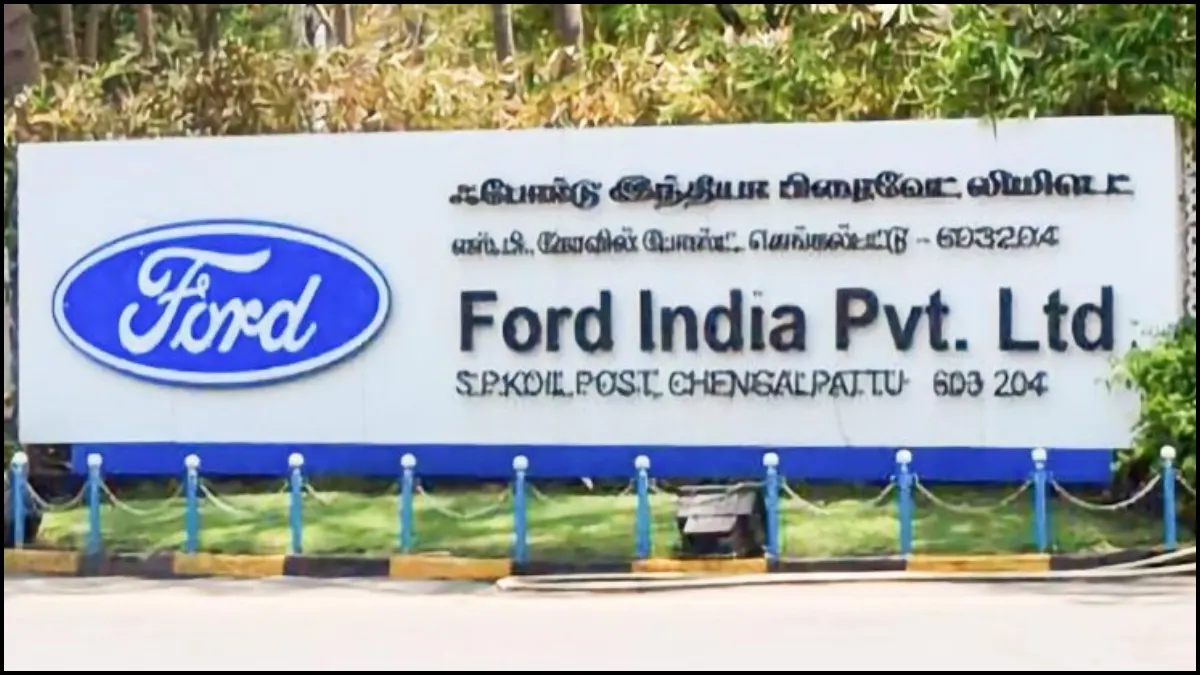
The Ford India Production Restart plan for its Chennai plant hangs in the balance after new US tariffs reshape global automotive economics. Learn about Ford’s future in India, investment challenges, and alternatives under review.
Ford India Production Restart – Chennai Plant’s Future at Stake
The Ford India Production Restart plan is facing a serious crossroads. After years of anticipation surrounding Ford’s manufacturing comeback, the automaker’s Chennai facility remains idle due to an intricate web of trade and policy changes. The primary obstacle? The new US tariffs implemented under President Trump’s trade policy, which have disrupted Ford’s export-driven operational model from India.
Ford had earlier proposed reviving production at the Maraimalai Nagar plant in Chennai exclusively for export markets. However, the newly imposed trade barriers have upended its profitability forecasts, leaving the Ford India Production Restart in uncertainty.
Ford India Production Restart – Background and Strategic Context
Ford India wound down local manufacturing in 2021, ceasing domestic operations and selling its Sanand plant (Gujarat) to Tata Motors. The Ford India Production Restart was later conceptualized as part of a renewed export strategy, with the Chennai plant central to this vision.
A Letter of Intent (LoI) submitted to the Tamil Nadu government in 2024 outlined plans for the export of engines and EV components. The state had offered substantial policy support to accelerate the reopening—aimed at strengthening Tamil Nadu’s automotive ecosystem and creating thousands of jobs.
But the global economy changed course dramatically in 2025. The rising import tariffs altered Ford’s financial equations, impacting its India revival prospects.
Trump Tariffs and Their Impact on Ford’s India Strategy
The Ford India Production Restart strategy hinged on exporting cost-efficient engines and parts to markets in Europe and Latin America. However, the newly introduced 25% US tariffs on automotive imports from several regions—including components produced in India—have rendered these plans economically challenging.
An insider from Ford’s global team revealed:
“When Ford planned its India restart in 2024, no one anticipated new tariffs. These export restrictions have deeply cut into the cost savings the company hoped to achieve.”
Without tariff exemptions or trade relief, resuming full-scale manufacturing in Chennai may no longer deliver the expected margins.
Two Scenarios for Ford India’s Future
Insiders say the Ford India Production Restart review has narrowed down to two pathways under Ford’s current restructuring framework:
-
Restart Operations for Export
Continue preparing the Chennai facility for component exportation by 2026. This approach includes limited engine manufacturing and potential future vehicle assembly for SUVs like the Ford Everest (Endeavour), focusing purely on international markets. -
Write Off Existing Investment
If tariffs remain high and logistics remain unfeasible, Ford could permanently shut down manufacturing at the Chennai site, writing off its physical investments but retaining real estate for possible OEM collaboration or leasing.
Tamil Nadu Government’s View on the Ford India Production Restart
The state’s urgency for the Ford India Production Restart is anchored in employment revival and industrial sustainability. Tamil Nadu’s Industry Minister Dr. TRB Rajaa previously confirmed that preparatory infrastructure work had begun at the plant, but official production timelines have since stalled.
The government continues to appeal for Ford’s return, calling it vital for Tamil Nadu’s ranking as India’s “Detroit of the East.” Reactivation of the plant could restore nearly 40,000 indirect jobs in the supplier base and 3,000 direct positions in manufacturing.
Global Focus Shift – Ford Prioritizes Europe
As the Ford India Production Restart remains in limbo, Ford’s investment blueprint in Europe grows stronger. The automaker is doubling down on the electric mobility shift, with major programs in Germany, Cologne, and the UK.
Key European developments include:
-
€4.4 billion investment in next-generation EV and battery facilities.
-
Expansion of the EV cluster in Cologne, launching new electric crossovers by 2026.
-
Establishment of an advanced battery module center in the UK.
This clear geographical priority indicates that India’s role may remain secondary until global production costs normalize or tariff bottlenecks ease.
Why Ford India Production Restart Still Holds Promise
Despite global challenges, India’s advantages remain strong:
-
Cost-effective manufacturing base with high technical competency.
-
Strategic location with export-friendly port networks.
-
Emerging EV market, supported by new FAME-II-linked incentives.
-
Availability of skilled personnel via Ford Business Solutions (FBS), which remains unaffected due to its service-based exemption from tariffs.
FBS alone employs about 12,000 engineers in Chennai and supports Ford’s global digital transition, helping maintain the company’s operational footprint in India.
Also Read : Bhumi Abhilekh Vibhag Bharti 2025 – Applications open for 903 Land Surveyor posts, last date 24th October!
Economic Repercussions if Restart Fails
If the Ford India Production Restart gets shelved permanently, Tamil Nadu could see negative investor sentiment ripple across its manufacturing base. The absence of Ford’s export volumes would weaken ancillary suppliers linked to its supply chain, especially those near Maraimalai Nagar.
Conversely, a restart could revitalize:
-
OEM confidence in India’s global resonance.
-
Export-led growth of high-value components.
-
Collaborative industry projects under Make in India initiatives.
Ford’s Official Position on the Production Restart
In a media statement, the company reiterated:
“Our stance on the Chennai manufacturing facility remains unchanged. Ford continues consultations with the Tamil Nadu government regarding potential export-oriented production.”
However, multiple industry executives have confirmed that the feasibility review will conclude before December 2025, determining whether the restart proceeds under reduced capacity or gets formally discontinued.
Summary: Ford India Production Restart at a Crossroads
The Ford India Production Restart represents both an opportunity and a dilemma—balancing global pressures with local ambitions. Tamil Nadu continues working with Ford for a possible revival, but profitability challenges driven by Trump tariffs could derail years of groundwork.
India’s lower production cost and expanding EV market keep hope alive, but as of now, optimism is cautiously measured.
FAQs: Ford India Production Restart
Q1: What is the current status of Ford’s Chennai plant?
The plant remains idle but maintained. Preparations for export production paused due to economic uncertainty.
Q2: Why has the Ford India Production Restart been delayed?
U.S. tariffs imposed in 2025 have made export operations less viable, prompting a strategic reassessment.
Also Read : 2025 Yezdi Adventure First Ride Review – The Ultimate Sweet Spot ADV
Q3: Has India or Tamil Nadu withdrawn support?
No, the Tamil Nadu government continues to support Ford and awaits final decisions from its global headquarters.
Q4: Will Ford still reenter the Indian car market?
A limited comeback via exports or niche models like the Ford Everest SUV remains under evaluation.
Q5: What will happen if the restart fails?
Ford may write off the Chennai plant assets permanently but will retain technology and engineering operations through FBS.
Q6: What does FBS do?
Ford Business Solutions (FBS) is Ford’s technology and back-end unit in Chennai, unaffected by trade tariffs and employing over 12,000 people.
Q7: How do U.S. tariffs affect the Chennai plan?
Components exported from India could face up to 25% import duties, making Indian manufacturing less profitable.
Q8: Is Ford focusing on another region instead of India?
Yes, the company is channeling significant EV investments towards Europe, particularly in Germany and the UK.