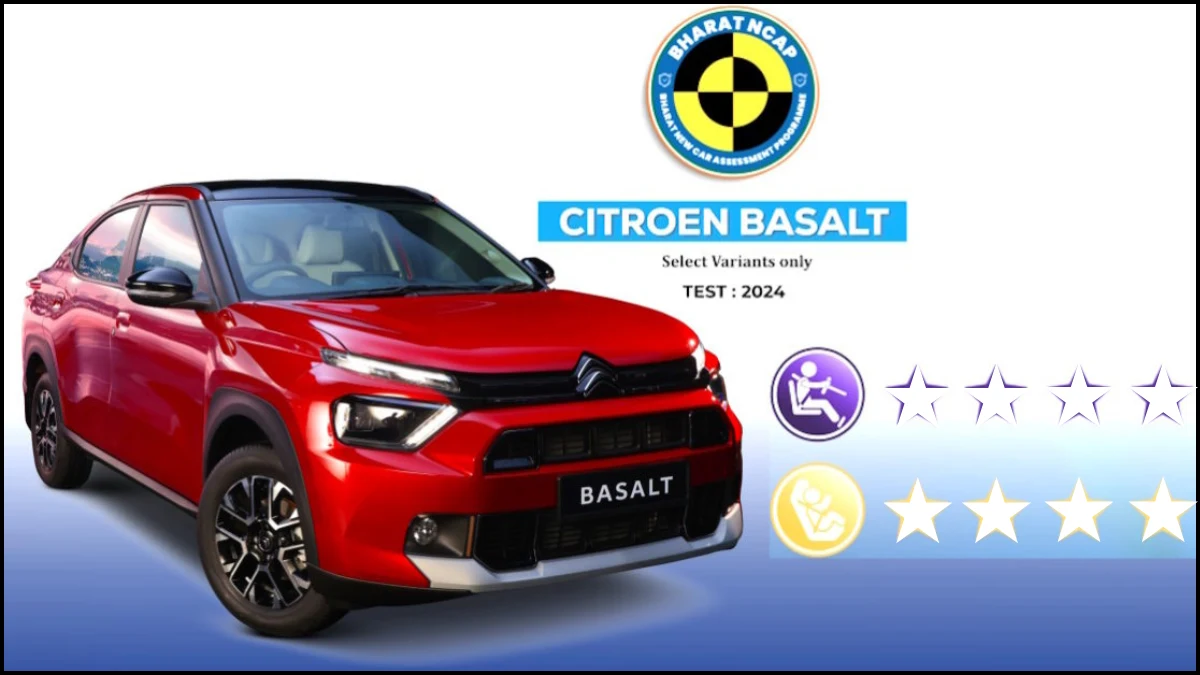
Citroen Basalt scores a disappointing 0 stars in Latin NCAP crash tests conducted on the Brazil-made version. While the India-made Basalt achieved a strong 4-star Bharat NCAP rating, the Latin NCAP results reveal critical differences in safety equipment and structural performance. Discover key insights into adult and child occupant safety, pedestrian protection, and overall safety assist systems of the Citroen Basalt.
Introduction
In a shock result for Stellantis, the Citroen Basalt scores zero stars in the latest Latin NCAP crash tests for the Brazilian-spec model. The results contrast starkly with the India-made Basalt, which had earned an impressive 4-star Bharat NCAP rating in October 2024.
Although both versions share Citroën’s CMP platform, critical variations in safety features and equipment led to this substantial difference. The Citroen Basalt scores from Latin NCAP underscore the importance of regional safety compliance standards and the gap between models designed for different markets. Let’s take a detailed look at what caused the dramatic variance in safety ratings.
Citroen Basalt Scores – Brazil-Manufactured Model Overview
The Brazil-manufactured Citroen Basalt tested by Latin NCAP came equipped with four airbags, electronic stability control (ESC), ISOFIX child seat anchors, and pedestrian protection compliance. However, the Indian version offers six airbags as standard, giving it a crucial safety edge.
The following features were available in the Latin NCAP-tested model:
-
4 airbags (dual front + front side)
-
Electronic Stability Control (ESC)
-
Seat Belt Reminder (driver only)
-
ISOFIX anchors and belt load limiters
-
Belt pretensioners
While these systems provide basic protection, the absence of side head protection airbags and a proper passenger airbag deactivation system limited its rating potential.
Citroen Basalt Scores – Adult Occupant Safety Performance
The Citroen Basalt scores 15.75 points in the Adult Occupant Safety category, equivalent to 39%.
Head and Neck Protection
Protection for the driver and front passenger’s head and neck was considered good. However, marginal chest protection was observed for the driver and weak chest protection for the passenger, mainly due to underperforming belt pretensioners.
Knee and Leg Area Protection
Both front occupants’ knee zones received marginal protection, as dangerous structures behind the dashboard could lead to injury during impact. On a positive note, tibia protection was deemed adequate, and the footwell area was classified as stable.
Bodyshell Integrity and Side Impact
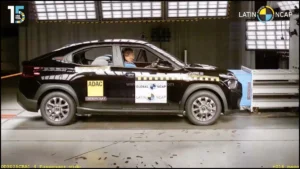
Although the footwell passed, the bodyshell was graded as unstable, unable to sustain further stresses. In the side impact test, the Citroen Basalt scores were better, with good protection for the head, abdomen, chest, and pelvis. However, it missed the side pole impact test because it lacked side curtain airbags.
Whiplash Results
During the whiplash test, which assesses neck protection, the Citroen Basalt scores were marginal, reflecting limited cushioning during rear impacts.
Citroen Basalt Scores – Child Occupant Safety
In the Child Occupant Safety portion, the Citroen Basalt scores 28.59 points (58%) — a far more respectable result, highlighting sound structural performance combined with effective restraint systems.
Test Dummy Results
Protection for the three-year-old and 1.5-year-old dummies was rated good in frontal impacts. The child restraint system (CRS) prevented head exposure, ensuring the children’s heads stayed within the protective zone.
However, during the side impact test, the three-year-old dummy’s head contacted the inner vehicle body, reducing the consistency of side-impact protection.
Installation and Airbag Issues
Some CRS setups failed during installation tests, signaling compatibility challenges. Furthermore, the Citroen Basalt scores were negatively influenced by the lack of a passenger airbag disconnection feature — a crucial requirement for safely installing rear-facing child seats. The SUV also failed the Latin NCAP’s airbag warning label standards.
Citroen Basalt Scores – Pedestrian Protection and Assist Systems
The Citroen Basalt scores 25.62 points (53%) in the Pedestrian Protection category, conforming to UN127 regulations.
Pedestrian Impact Zones
The head impact performance was mostly good to adequate, except for poor zones near the A-pillars and windshield edges. The hood center demonstrated excellent protection, while both lower and upper leg areas achieved solid performance for pedestrian safety.
Safety Assist Systems Evaluation
For Safety Assist, the Citroen Basalt scores 15 points (35%) — a low figure due to missing key active safety features. While the vehicle included a driver-only seat belt reminder, it failed Latin NCAP’s technical standards.
The following systems were not offered as standard:
-
Speed limitation system
-
Blind spot detection
-
Lane support system
-
Road edge detection
-
Autonomous Emergency Braking (AEB Interurban)
-
AEB VRU (Pedestrian/Cyclist detection) was not tested since it was unavailable.
These omissions heavily impacted the Citroen Basalt scores and its overall safety grade.
Structure Comparison – India vs. Brazil Models
Both versions of the Citroen Basalt utilize the CMP modular platform, but safety configurations differ significantly between India and Brazil.
| Component | India Spec (Bharat NCAP – 4 Stars) | Brazil Spec (Latin NCAP – 0 Stars) |
|---|---|---|
| Airbags | 6 standard | 4 standard |
| Side Head Protection | Yes | No |
| Passenger Airbag Disconnect | Yes | No |
| Seat Belt Reminder | Front & Rear | Driver only |
| Bodyshell | Stable | Unstable |
| Electronic Safety Features | ESC, hill hold, TPMS | ESC only |
This comparison highlights why the India-made Citroen Basalt scores better in global and domestic crash assessments.
Latin NCAP Observations on Citroen and Stellantis
As of 2020, Latin NCAP has evaluated 10 Stellantis models, none surpassing the two-star threshold. The Citroen Basalt scores zero stars, adding to the manufacturer’s pattern of underperformance in Latin NCAP assessments. The agency criticized Stellantis for failing to standardize key life-saving features like advanced AEB and head-curtain airbags across its South American product lineup.
Also Read : 2026 Toyota Hilux Spotted Fueling Up Ahead of Global Launch — Design, Interior, and Feature Updates Revealed
Key Takeaways from Citroen Basalt Scores
-
Citroen Basalt scores 0 stars in the Latin NCAP crash test.
-
The Brazilian model’s body structure is unstable, unlike the Indian 4-star-rated version.
-
Limited safety assist systems and fewer airbags contributed to the failure.
-
Adequate head and tibia protection but poor chest and knee safety.
-
Child restraint performance was acceptable, though installation inconsistencies exist.
These findings underline the urgent need for consistent safety equipment across all global versions of the Citroen Basalt to ensure equal protection for all users.
Expert Verdict
The Citroen Basalt scores reveal more than just numerical failure — they reflect a missed opportunity for Stellantis to showcase global safety consistency. While the car’s Latin counterpart faltered with an unstable structure and limited systems, the India-made Basalt’s 4-star rating proves that strong results are achievable when full safety packages are standardized.
This test reiterates how automakers’ regional safety strategies deeply influence outcomes, and consumers must stay informed about such differences before purchase.