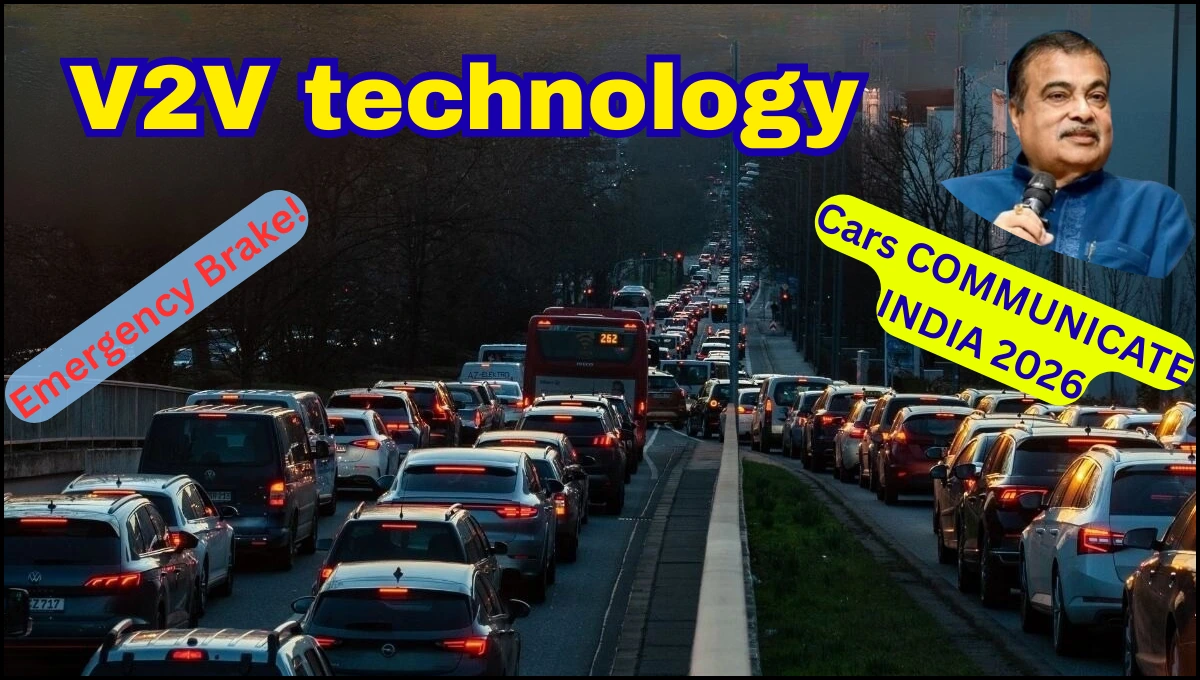
V2V technology coming to India by 2026! Cars talk to prevent crashes in fog & traffic. Nitin Gadkari’s bold plan to slash accidents.
Picture this: you’re cruising down a foggy highway in North India, horns blaring, when suddenly your car beeps wildly and slows down on its own. No collision. Why? Because your vehicle just “talked” to the truck ahead, warning of sudden brakes. That’s V2V technology – not science fiction, but India’s soon-to-be reality by end-2026. With over 29,000 deaths on national highways in just the first half of 2025 alone, this tech promises to rewrite our chaotic roads.
India’s Deadly Roads: The Alarming Stats
India’s roads are a battlefield. National highways, just 2% of the network, claim over 30% of fatalities – 53,090 lives lost in 2024, with 2025 already surpassing half that in six months. Foggy winters pile up multi-vehicle crashes; speeding trucks rear-end parked vehicles. Minister Nitin Gadkari highlighted these in a recent state transport ministers’ meet, pushing V2V technology as the fix.
Common culprits? Rear-end collisions (40% of cases), poor visibility, and driver lapses. Without intervention, experts predict 1.5 lakh annual deaths by 2030. V2V steps in here, letting vehicles share real-time data sans internet or towers.
How V2V technology Works – Simple Breakdown
V2V technology is like giving cars a sixth sense. Vehicles broadcast “Basic Safety Messages” (BSMs) every 0.1 seconds: speed, position, direction, braking status. A car 300 meters away detects your sudden stop and alerts its driver – or auto-brakes if linked to ADAS.
No mobile network needed; it uses dedicated short-range comms (DSRC) or cellular V2X (C-V2X) on 5.9GHz band. Range? Up to 1 km in direct sight, piercing fog or hills via mesh networks where cars relay signals. Imagine: your bike warns of a blind-spot truck during a Delhi overtake.
Key perks in Indian context:
- Fog-proof alerts: Chain reactions in Punjab winters? Gone.
- Rear-end savers: Parked vehicles ping speedsters.
- Mesh magic: Works in rural jams without infra.
V2V Technology in India: Nitin Gadkari’s Masterplan
Union Minister Nitin Gadkari announced it post the annual state meet: phased rollout by 2026-end via notifications. New vehicles first, then retrofits. Cost? Around ₹5,000 crore nationwide. Ties into bus safety upgrades too – fire extinguishers, drowsiness detectors after 135 deaths in six crashes from poor designs.
Why now? 2025 highway deaths spiked 50% over last year, demanding tech beyond speed cameras. Government eyes V2V with ADAS integration for seamless safety. Bikes like your favorite Royal Enfield could get it via aftermarket? Early days, but mandates loom.
V2V vs V2I vs V2X: Clearing the Jargon Jungle
Don’t mix them up! Vehicle-to-Vehicle (V2V) is car-to-car chats. V2I talks to infra like signals; V2P to pedestrians; V2N to cloud. All under V2X umbrella.
| Tech | What It Does | India Fit |
|---|---|---|
| V2V | Vehicle-to-vehicle alerts (speed, brakes) | Fog crashes, overtakes – perfect for highways |
| V2I | Traffic lights, tolls | Urban signals, but needs infra we lack |
| V2X | All-in-one (V2V + more) | Future-proof, but V2V starts simple |
V2V wins for India: low-cost, no new roads needed.
Global Success Stories: Lessons for Bharat
US NHTSA says V2V could cut crashes 80%, saving billions in hours. Europe mandates via C-ITS; BMW, VW lead with dynamic spectrum sharing. China tests C-V2X fleets; pilots show 30% fewer rear-ends.
India? Pilots could mirror US GM Cadillac trials, where V2V spotted hazards beyond line-of-sight. Our twist: Affordable for two-wheelers dominating roads.
Also Read : Tata Harrier and Safari Petrol Prices Announced- Starting at ₹12.89 Lakh with Game-Changing 1.5L Hyperion Engine!
Challenges and Fixes: Realistic Indian Take
Retrofit costs pinch wallets – ₹10,000-50,000 per vehicle? Mandates might hike prices. Cybersecurity? Hack-proof encryption needed. Standards clash: DSRC vs C-V2X – India likely picks C-V2X for 5G synergy.
Solutions:
- Phased rollouts: New cars first, subsidies for old.
- Local manufacturing: Tata, Mahindra gear up.
- Testing: Highway pilots in 2026.
As an auto enthusiast tracking EVs and bikes from Kalamb, this excites – safer rides for Royal Enfields in Maharashtra monsoons!
Extra Safety Boosts from the Meet
Beyond V2V technology, Gadkari ordered bus upgrades: emergency hammers, driver monitors. Addresses 135 deaths from bad designs. Ties into holistic safety: better enforcement, awareness.
Why V2V technology Save Lives – The Big Picture
NHTSA: Up to 80% crash drop. For India, halving 1.5 lakh deaths? Priceless. By 2026, your next Maruti or Hero could ping dangers ahead. Roads less deadly, traffic smoother – a win for our billion-plus wheels.
This isn’t just tech; it’s hope for families shattered yearly. Stay tuned – V2V rollout updates incoming. Drive safe, folks!