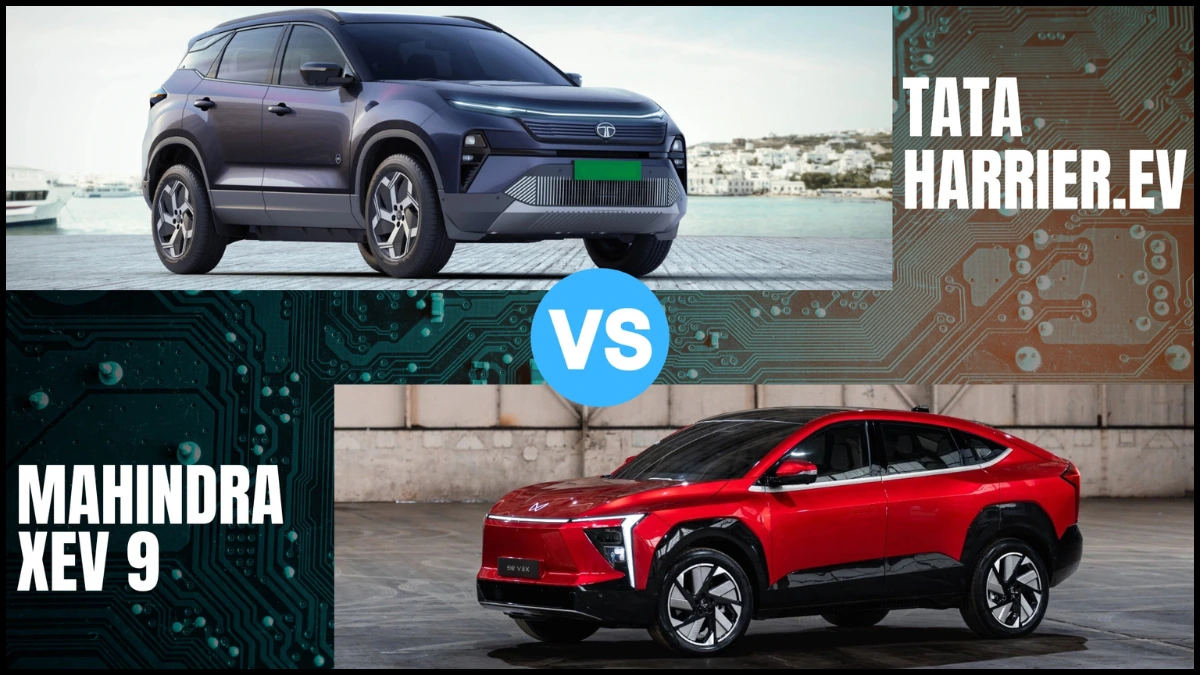
Mahindra XEV 9e vs Tata Harrier EV – Explore price, specs, range, battery, features, and performance of India’s leading electric SUVs. Know which EV suits you best.
Mahindra XEV 9e vs Tata Harrier EV – A Complete 2025 Electric SUV Comparison
The Indian EV market in 2025 is racing ahead with two popular contenders, the Mahindra XEV 9e and Tata Harrier EV. Both models bring innovation, technology, and performance to the premium SUV space. But which one offers better value, range, and everyday usability? This detailed Mahindra XEV 9e vs Tata Harrier EV comparison covers pricing, size, performance, features, and ownership experience to help you make the right choice.
Mahindra XEV 9e vs Tata Harrier EV: Price and Variants
The Mahindra XEV 9e price in New Delhi starts at Rs 21.90 lakh (ex-showroom) and goes up to Rs 32.98 lakh on-road. On the other hand, the Tata Harrier EV price begins at Rs 21.49 lakh (ex-showroom), reaching around Rs 31.91 lakh on-road.
While both SUVs sit in the same premium bracket, the Mahindra XEV 9e offers advanced charger options including an 11.2kW unit, while Tata focuses on multi-variant offerings across different trims. Both qualify for EV benefits under India’s latest electric vehicle incentive programs, making them attractive in terms of long-term cost savings.
Battery Pack, Range, and Charging Performance
One of the most important parts of this Mahindra XEV 9e vs Tata Harrier EV comparison is their battery performance.
The Mahindra XEV 9e comes with a 79 kWh lithium-ion battery that delivers an ARAI-rated range of 656 km. By contrast, the Tata Harrier EV features a 75 kWh battery with an impressive 622 km range.
Fast charging capabilities are almost identical.
-
Mahindra XEV 9e: 20 minutes for 0–80% with a 180 kW DC charger
-
Tata Harrier EV: 20–80% in 25 minutes using a 120 kW DC charger
Both SUVs also support home charging via 7.2 kW wall units and 11.2 kW AC systems. The Mahindra has a flexible 13A household charging option, while Tata provides strong DC charging support for intercity use.
Power, Speed, and Driving Dynamics
In terms of performance, the Tata Harrier EV leads slightly. It produces 390 bhp and 504 Nm torque through dual permanent magnet synchronous motors and uses all-wheel drive for superior traction. It accelerates from 0–100 kmph in just 6.3 seconds.
The Mahindra XEV 9e delivers 282 bhp and 380 Nm with a single motor setup and rear-wheel drive. It performs smoothly and maintains stability due to its tuned suspension setup. For city usage and long-distance travel, the XEV 9e provides linear power delivery and excellent efficiency, which is a strong advantage for many EV buyers.
Dimensions and Design Appeal
In terms of proportions, the Mahindra XEV 9e is longer, while the Tata Harrier EV is wider and taller.
| Specification | Mahindra XEV 9e | Tata Harrier EV |
|---|---|---|
| Length | 4789 mm | 4607 mm |
| Width | 1907 mm | 2132 mm |
| Height | 1694 mm | 1740 mm |
| Wheelbase | 2775 mm | 2741 mm |
| Boot Capacity | 663 L | 502 L |
Interior Comfort and Technology
Inside the Mahindra XEV 9e, you’re welcomed by triple 12.3-inch displays, a Harman/Kardon sound system, dual-zone climate control, and a futuristic dashboard layout. The cabin emphasizes digital sophistication, complete with adjustable steering and rear AC vents. However, the elevated floor can reduce headroom for taller passengers.
The Tata Harrier EV delivers a more driver-focused cabin featuring a 14.5-inch touchscreen, 10-speaker JBL audio, a panoramic sunroof, and ventilated front seats. It also includes wireless charging, paddle shifters, and Level 2 ADAS for enhanced safety and convenience. The only downside is a slightly raised seating position that affects thigh support for rear passengers.
Safety Features and EV-Specific Innovations
Safety is a core focus for both brands. The Mahindra XEV 9e features Level 2 ADAS, adaptive cruise control, and four levels of regenerative braking. Tata Harrier EV also gets a similar ADAS package with lane-keep assist, blind spot monitoring, and a 360-degree camera.
Both SUVs use CCS-II charging ports, lithium-ion batteries, and single-speed automatic transmissions. Mahindra’s RWD configuration prioritizes balance, while Tata’s AWD provides more grip and control.
Ride Comfort and Handling Experience
The Tata Harrier EV is known for its outstanding ride comfort. Its suspension setup absorbs bumps well, making it suitable for both highways and city roads. The AWD traction further improves control under diverse conditions.
The Mahindra XEV 9e, with its rear-wheel system, offers a connected feel and superior mid-speed balance. The steering is lightweight in traffic yet confident on highways. Both models feature MacPherson struts at the front and multi-link suspension at the rear, ensuring refined dynamics.
Running Cost and Ownership
The average running cost per kilometer is nearly identical:
-
Mahindra XEV 9e: ₹1.20/km
-
Tata Harrier EV: ₹1.21/km
Monthly EMI options start around ₹61,000–₹63,000 in New Delhi. Insurance for both models averages around ₹1.4 lakh annually, while both manufacturers provide 8-year battery warranties.
Pros and Cons
Mahindra XEV 9e Pros:
-
Longest driving range in its segment
-
Triple-screen infotainment with premium audio
-
Smooth, refined power delivery
Mahindra XEV 9e Cons:
-
Higher floor can limit comfort for tall passengers
-
Long-term reliability data still developing
Tata Harrier EV Pros:
-
AWD capability with instant acceleration
-
Rich features and large infotainment system
-
Balanced comfort and technology integration
Tata Harrier EV Cons:
-
Slightly less boot space
-
Rear seat thigh support affected by floor design
Also Read : Tata EV Discounts October 2025: Up to Rs 1.90 Lakh Off on Curvv, Punch, Tiago & Nexon
Verdict – Mahindra XEV 9e vs Tata Harrier EV
This Mahindra XEV 9e vs Tata Harrier EV comparison makes it clear: both electric SUVs redefine performance and efficiency for India’s EV future.
Choose the Mahindra XEV 9e if your priorities are range, balanced handling, and futuristic tech. Opt for the Tata Harrier EV if you value raw performance, superior comfort, and a luxury-focused cabin.
Regardless of the choice, both SUVs represent the next phase of India’s electric mobility, blending design, innovation, and sustainability for the modern driver.