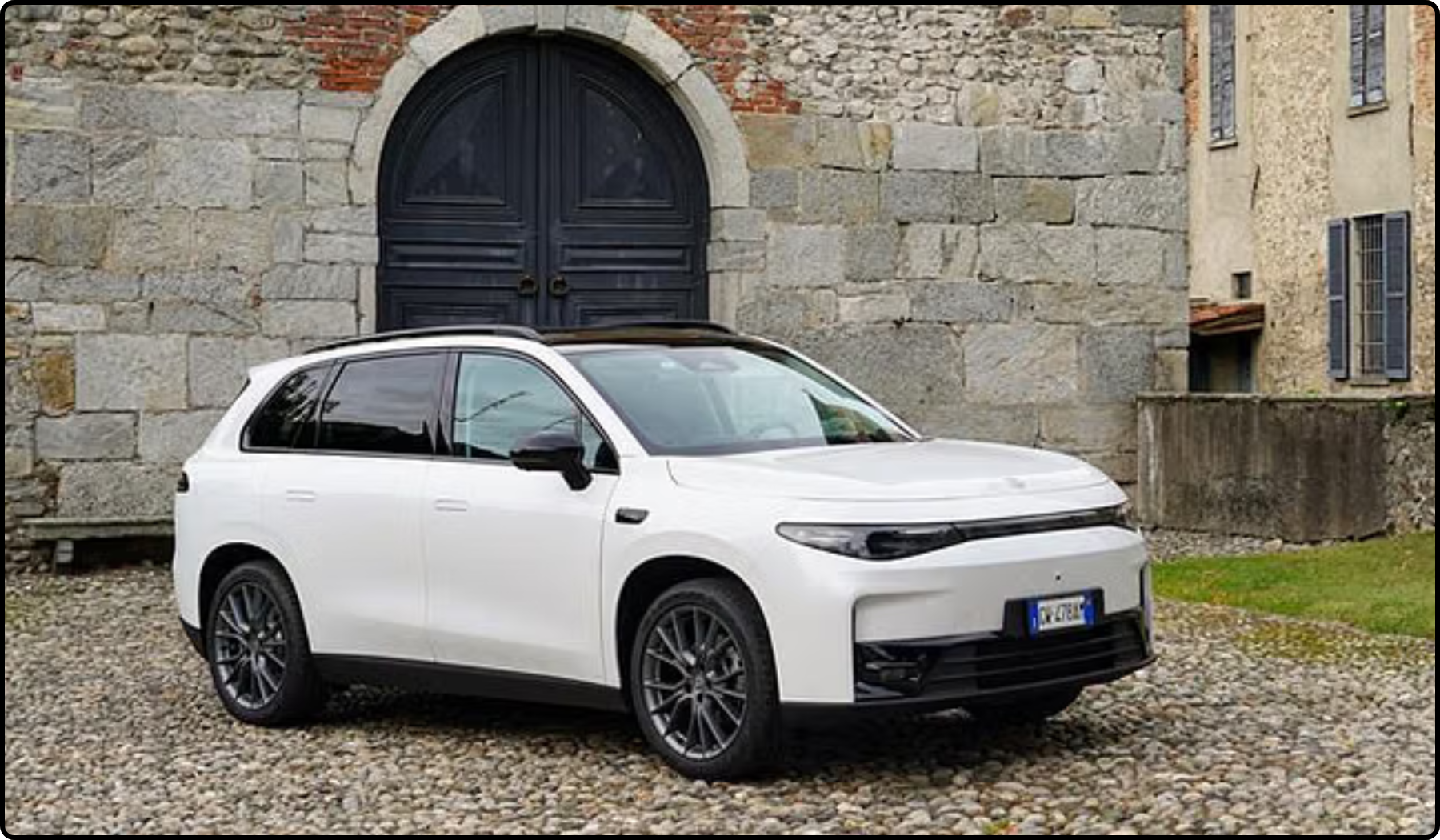
Stellantis To Launch Leapmotor EVs in India between FY2026–27. Expected models include Leapmotor B10 SUV and T03 hatchback. Learn about Stellantis’ EV strategy, dealership expansion, price expectations, and FAQs.
Introduction
The Indian EV market is set to welcome a new global entrant as Stellantis To Launch Leapmotor EVs between April 2026 and March 2027. Stellantis, the world’s fourth-largest automaker, already sells Jeep and Citroen in India. Now, it plans to bring Chinese EV brand Leapmotor to target premium buyers who are looking for technology-driven, stylish, and sustainable vehicles.
This article explores Stellantis’ EV roadmap for India, possible Leapmotor models such as the B10 SUV and T03 hatchback, distribution strategy, pricing, and challenges in a highly competitive market.
Stellantis To Launch Leapmotor EVs: Timeline for India
According to Shailesh Hazela, CEO & MD, Stellantis India, the first Leapmotor electric car will arrive in India in FY2026–27. The brand is evaluating a B-segment or entry C-segment EV for its debut.

The timing of Stellantis To Launch Leapmotor EVs in India coincides with major global EV makers like Tesla, VinFast, and BYD strengthening their footprint here. Stellantis hopes to carve out its niche by offering Leapmotor as a premium EV brand.
Why Stellantis Is Bringing Leapmotor to India
Stellantis acquired a 21% stake in Leapmotor in 2023 for $1.6 billion, forming a global joint venture called Leapmotor International. The move allows Stellantis to expand Leapmotor’s global reach, including Europe, Southeast Asia, and now India.
Globally, Leapmotor is positioned as a low-cost EV brand, but Stellantis aims to rebrand it as premium in India due to higher import costs and the demand for aspirational electric vehicles in urban markets. Thus, Stellantis To Launch Leapmotor EVs is not just about new products—it’s about a strategic repositioning for the Indian consumer.
Expected Models for India
1. Leapmotor B10 SUV
- Dimensions: 4,515 mm long, 1,885 mm wide, 1,655 mm tall, 2,735 mm wheelbase.
- Performance:
-
215 hp motor with 240 Nm torque.
-
Battery: 56.2 kWh (361 km range) or 67.1 kWh (434 km range).
-
-
Relevance for India: SUVs dominate the premium car market, making the B10 the strongest candidate for India.
2. Leapmotor T03 Hatchback
- Dimensions: 3,620 mm long, 1,652 mm wide, 1,577 mm tall, 2,400 mm wheelbase.
- Performance:
-
94 hp motor with 158 Nm torque.
-
37.3 kWh battery, 265 km range.
-
-
Relevance for India: Compact size makes it ideal for congested urban areas.
By introducing these models, Stellantis To Launch Leapmotor EVs with a dual strategy—appealing to premium SUV enthusiasts while also offering an affordable city EV option.
Dealership & Retail Strategy
Stellantis To Launch Leapmotor EVs through its existing multi-brand Stellantis Brand Houses (SBH), which already retail Jeep and Citroen.
- Dealer strength: 110 outlets.
- Expansion plan: Grow to 150 outlets within six months.
- EV readiness: All showrooms and service centres are EV-compatible.
This ensures that when Stellantis To Launch Leapmotor EVs, it can leverage existing infrastructure without heavy investments in new dealerships.
Market Positioning
Unlike Europe, where Leapmotor is budget-friendly, in India Stellantis To Launch Leapmotor EVs as premium products.
- Models likely imported as CKD kits, assembled in India.
- Higher costs mean pricing will compete with premium EVs from Hyundai, Kia, and BYD.
- Stellantis will avoid overlapping with Citroen and Jeep by aiming Leapmotor at tech-driven premium buyers.
Stellantis’ Broader India Strategy
Beyond Stellantis To Launch Leapmotor EVs, the company continues to focus on Jeep and Citroen:
- Citroen aims to achieve 2,000 sales per month with new launches like Basalt X.
- Jeep is using GST price cuts to attract new buyers.
- Dealer network expanding under a hub-and-spoke model to reduce investment costs.
Stellantis has invested ₹11,000 crore in India and operates three plants (Pune, Hosur, Chennai), two R&D centres, and IT hubs, employing 5,000+ people.
Competition for Leapmotor in India
The decision for Stellantis To Launch Leapmotor EVs comes as:
- Tesla gears up to launch Model Y and Model 3.
- VinFast invests ₹16,000 crore in Tamil Nadu.
- BYD expands its Atto 3 and Seal lineup.
In this competitive EV ecosystem, Stellantis hopes Leapmotor will stand out with its blend of Chinese innovation and European strategy.
Also Read : Heavy rain compensation announced in 29 districts – See the complete Anudan List!
Challenges Ahead
While Stellantis To Launch Leapmotor EVs sounds promising, challenges include:
- High pricing due to imports.
- Underdeveloped EV charging network.
- Low Leapmotor brand awareness in India.
- Stellantis’ own struggle with Jeep and Citroen sales.
Still, with India’s EV market booming, Stellantis is betting big on Leapmotor.
FAQs on Stellantis To Launch Leapmotor EVs
Q1. When will Stellantis launch Leapmotor EVs in India?
The first model will debut between April 2026 and March 2027.
Q2. Which model will launch first?
The Leapmotor B10 SUV is the most likely candidate, but the T03 hatchback may also be considered.
Q3. Will Stellantis manufacture Leapmotor EVs in India?
Currently, no. They are expected to import CKD kits and assemble locally.
Q4. How will Stellantis sell Leapmotor EVs?
Through its multi-brand Stellantis Brand Houses, alongside Jeep and Citroen.
Also Read : New Skoda Octavia RS India Launch in November 2025
Q5. What will be the price range?
- B10 SUV: Around ₹20–30 lakh.
- T03 hatchback: Around ₹12–15 lakh.
Q6. Who are Leapmotor’s competitors in India?
Tesla, BYD, Hyundai, Kia, and VinFast.
Q7. Why is Stellantis targeting premium buyers?
Because CKD imports raise costs, and Stellantis wants Leapmotor to appeal to aspirational, tech-savvy urban customers.
The decision of Stellantis To Launch Leapmotor EVs in India is a strategic move to capture the fast-growing premium electric vehicle market. With models like the Leapmotor B10 SUV and T03 hatchback, Stellantis is positioning Leapmotor as a modern, stylish, and technology-rich brand for Indian consumers.